Diagram of an industrial robot arm like Unimate

Unimate: First Industrial Robot

What Happened

The first Unimate robot was installed on a General Motors assembly line in New Jersey, performing die-casting and spot-welding tasks. It was the first industrial robot to replace humans on a production line.

Why It Mattered

Launched the industrial robotics revolution. Showed that machines could perform dangerous, repetitive physical tasks reliably.

Key People

Organizations

Tags

Related Milestones

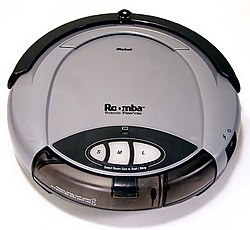
Original iRobot Roomba vacuum robot
Product

iRobot Roomba

iRobot released the Roomba, a robotic vacuum cleaner that used sensors and algorithms to autonomously navigate and clean floors. At $200, it brought autonomous robots into millions of homes.

Colin AngleHelen GreineriRobot
Shakey the robot at the Computer History Museum
Research

Shakey the Robot

Shakey was the first mobile robot that could reason about its actions. It combined computer vision, natural language processing, and planning to navigate rooms, push objects, and solve simple tasks. It used the A* search algorithm and STRIPS planner.

Charles RosenNils NilssonStanford Research Institute
John McCarthy, organizer of the Dartmouth Conference
Research

The Dartmouth Conference

A two-month workshop at Dartmouth College where the term 'Artificial Intelligence' was officially coined. The proposal stated: 'Every aspect of learning or any other feature of intelligence can in principle be so precisely described that a machine can be made to simulate it.' This gathering brought together the founders of the field.

John McCarthyMarvin MinskyDartmouth CollegeMIT
Frank Rosenblatt, inventor of the Perceptron
Research

The Perceptron

Frank Rosenblatt built the Mark I Perceptron, the first hardware implementation of an artificial neural network. It could learn to classify simple visual patterns. The New York Times reported it as an 'Electronic Brain' that the Navy expected would 'be able to walk, talk, see, write, reproduce itself and be conscious of its existence.'

Frank RosenblattCornell Aeronautical Laboratory
Lisp programming language logo
Infrastructure

LISP Programming Language

John McCarthy created LISP (LISt Processing), a programming language designed specifically for AI research. Its features — recursion, dynamic typing, garbage collection, and homoiconicity — were decades ahead of their time.

John McCarthyMIT

Get the latest AI milestones as they happen

Join the newsletter. No spam, just signal.