Amazon Alexa voice assistant logo

Amazon Echo & Alexa

What Happened

Amazon launched the Echo smart speaker with Alexa voice assistant, creating an entirely new product category. Alexa could play music, control smart home devices, answer questions, and run third-party 'skills.' It brought always-on AI into the living room.

Why It Mattered

Created the smart speaker market (100M+ units sold by 2019). Pioneered the concept of ambient computing — AI that's always listening and ready to help. Raised privacy concerns that persist today.

Organizations

Tags

Related Milestones

Apple Siri voice assistant logo
Product

Apple Launches Siri

Apple introduced Siri as a built-in feature of the iPhone 4S — the first major voice assistant integrated into a mainstream consumer device. Users could ask questions, set reminders, and control their phone with natural speech.

Apple
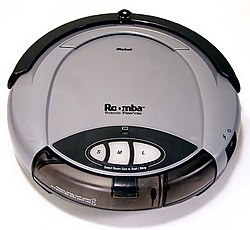
Original iRobot Roomba vacuum robot
Product

iRobot Roomba

iRobot released the Roomba, a robotic vacuum cleaner that used sensors and algorithms to autonomously navigate and clean floors. At $200, it brought autonomous robots into millions of homes.

Colin AngleHelen GreineriRobot
GitHub Copilot AI coding assistant logo
Product

GitHub Copilot: AI Writes Code

GitHub launched Copilot as a technical preview — an AI pair programmer powered by OpenAI Codex that could autocomplete entire functions, write boilerplate, and suggest code from natural language comments. It was trained on billions of lines of public code.

GitHubOpenAI
AlexNet deep neural network architecture diagram
Research

AlexNet: The ImageNet Moment

AlexNet, a deep convolutional neural network, won the ImageNet competition by a staggering margin — reducing the error rate from 26% to 16%. Trained on two NVIDIA GTX 580 GPUs, it was dramatically deeper and more powerful than previous entries. The AI community was stunned.

Alex KrizhevskyIlya SutskeverUniversity of Toronto
Tomáš Mikolov, lead author of Word2Vec
Research

Word2Vec: Words as Vectors

Google researchers published Word2Vec, showing that relatively small neural networks could efficiently learn meaningful vector representations of words from large text corpora. The famous example `king - man + woman ≈ queen` made the idea vivid: semantic relationships could be captured geometrically in vector space.

Tomas MikolovGoogle

Get the latest AI milestones as they happen

Join the newsletter. No spam, just signal.