Symbolics Lisp machine used for expert systems

R1/XCON: Expert Systems Go Corporate

At a glance

Date
1980
Era
Expert Systems Boom (19801987)
Category
Product Launches
Impact
3 / 5
Key people
John McDermott
Organizations
Carnegie Mellon University, Digital Equipment Corporation

What Happened

R1 (later XCON) was deployed at DEC to configure VAX computer systems. It saved DEC an estimated $40 million per year. This commercial success sparked a gold rush: by 1985, companies were spending over $1 billion per year on expert systems.

Why It Mattered

Proved AI could deliver real business value. Launched the expert systems industry and revived AI funding — but also set up the next crash.

Key People

Organizations

Tags

Frequently asked questions

When did R1/XCON: Expert Systems Go Corporate happen?+

R1/XCON: Expert Systems Go Corporate took place in 1980.

Who was behind R1/XCON: Expert Systems Go Corporate?+

For R1/XCON: Expert Systems Go Corporate, key people included John McDermott and organizations involved were Carnegie Mellon University and Digital Equipment Corporation.

Why was R1/XCON: Expert Systems Go Corporate important?+

Proved AI could deliver real business value. Launched the expert systems industry and revived AI funding — but also set up the next crash.

Which era of AI history does R1/XCON: Expert Systems Go Corporate belong to?+

R1/XCON: Expert Systems Go Corporate is part of the Expert Systems Boom era (1980–1987) — a significant development in the product launches category.

Related Milestones

John Hopfield, inventor of Hopfield networks
Research

Hopfield Networks: Physics Meets Neural Networks

Physicist John Hopfield showed that a type of recurrent neural network could serve as content-addressable memory, using concepts from statistical physics. The network would converge to stable states that could store and retrieve patterns — connecting neuroscience, physics, and computation.

John HopfieldCaltech
Infrastructure

Japan's Fifth Generation Computer Project

Japan's Ministry of International Trade and Industry launched a 10-year, $850 million project to build 'fifth generation' computers with AI capabilities — parallel processing machines that could understand natural language and reason like humans.

MITI (Japan)
Geoffrey Hinton, pioneer of backpropagation in neural networks
Research

Backpropagation Rediscovered

Rumelhart, Hinton, and Williams published 'Learning Representations by Back-propagating Errors' in Nature, demonstrating that backpropagation could train multi-layer neural networks effectively. The same year, the PDP (Parallel Distributed Processing) group published their influential two-volume work on connectionism.

David RumelhartGeoffrey HintonUC San DiegoCarnegie Mellon University
Diagram of an industrial robot arm like Unimate
Product

Unimate: First Industrial Robot

The first Unimate robot was installed on a General Motors assembly line in New Jersey, performing die-casting and spot-welding tasks. It was the first industrial robot to replace humans on a production line.

George DevolJoseph EngelbergerGeneral MotorsUnimation
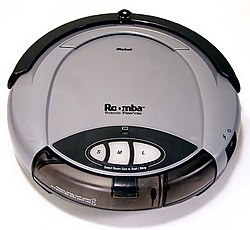
Original iRobot Roomba vacuum robot
Product

iRobot Roomba

iRobot released the Roomba, a robotic vacuum cleaner that used sensors and algorithms to autonomously navigate and clean floors. At $200, it brought autonomous robots into millions of homes.

Colin AngleHelen GreineriRobot

Get the latest AI milestones as they happen

Join the newsletter. No spam, just signal.