Portrait of Alan Turing

Turing's 'Computing Machinery and Intelligence'

What Happened

Alan Turing published his landmark paper in the journal Mind, proposing the 'Imitation Game' (now known as the Turing Test) as a way to evaluate machine intelligence. He asked: 'Can machines think?' and argued the question itself was meaningless — what mattered was whether a machine could convincingly imitate human conversation.

Why It Mattered

Defined the philosophical framework for AI research for decades. The Turing Test remains the most famous benchmark for machine intelligence, even as modern AI has moved beyond it.

Key People

Organizations

Tags

Related Milestones

Research

Samuel's Checkers Program

Arthur Samuel created a checkers-playing program at IBM that could learn from experience, improving its play over time. He coined the term 'machine learning' to describe programs that learn without being explicitly programmed.

Arthur SamuelIBM
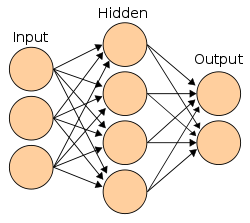
Artificial neural network diagram representing McCulloch-Pitts neuron model
Research

First Mathematical Model of Neural Networks

McCulloch and Pitts published 'A Logical Calculus of Ideas Immanent in Nervous Activity,' creating the first mathematical model of an artificial neuron. They showed that simple binary neurons connected in networks could, in principle, compute any function computable by a Turing machine.

Warren McCullochWalter PittsUniversity of Chicago
Research

Logic Theorist: The First AI Program

Newell and Simon created the Logic Theorist, often called the first AI program. It could prove mathematical theorems from Whitehead and Russell's Principia Mathematica — and even found a more elegant proof than the original for one theorem. It was debuted at the Dartmouth Conference.

Allen NewellHerbert A. SimonRAND CorporationCarnegie Tech
John McCarthy, organizer of the Dartmouth Conference
Research

The Dartmouth Conference

A two-month workshop at Dartmouth College where the term 'Artificial Intelligence' was officially coined. The proposal stated: 'Every aspect of learning or any other feature of intelligence can in principle be so precisely described that a machine can be made to simulate it.' This gathering brought together the founders of the field.

John McCarthyMarvin MinskyDartmouth CollegeMIT
Frank Rosenblatt, inventor of the Perceptron
Research

The Perceptron

Frank Rosenblatt built the Mark I Perceptron, the first hardware implementation of an artificial neural network. It could learn to classify simple visual patterns. The New York Times reported it as an 'Electronic Brain' that the Navy expected would 'be able to walk, talk, see, write, reproduce itself and be conscious of its existence.'

Frank RosenblattCornell Aeronautical Laboratory

Get the latest AI milestones as they happen

Join the newsletter. No spam, just signal.