Theoretical Foundations
1943–1955 · 4 milestones
The mathematical and philosophical groundwork for artificial intelligence was laid by visionaries who dared to ask: can machines think?
Milestones
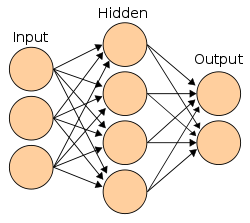
First Mathematical Model of Neural Networks
McCulloch and Pitts published 'A Logical Calculus of Ideas Immanent in Nervous Activity,' creating the first mathematical model of an artificial neuron. They showed that simple binary neurons connected in networks could, in principle, compute any function computable by a Turing machine.

Turing's 'Computing Machinery and Intelligence'
Alan Turing published his landmark paper in the journal Mind, proposing the 'Imitation Game' (now known as the Turing Test) as a way to evaluate machine intelligence. He asked: 'Can machines think?' and argued the question itself was meaningless — what mattered was whether a machine could convincingly imitate human conversation.
Samuel's Checkers Program
Arthur Samuel created a checkers-playing program at IBM that could learn from experience, improving its play over time. He coined the term 'machine learning' to describe programs that learn without being explicitly programmed.
Logic Theorist: The First AI Program
Newell and Simon created the Logic Theorist, often called the first AI program. It could prove mathematical theorems from Whitehead and Russell's Principia Mathematica — and even found a more elegant proof than the original for one theorem. It was debuted at the Dartmouth Conference.
Categories in this Era
Popular Topics
Frequently asked questions
When was the Theoretical Foundations era of AI?+
The Theoretical Foundations era of artificial intelligence spans 1943 to 1955.
What defined the Theoretical Foundations era?+
The mathematical and philosophical groundwork for artificial intelligence was laid by visionaries who dared to ask: can machines think?
What are the key milestones of the Theoretical Foundations era?+
This era includes 4 milestones, among the most impactful: Turing's 'Computing Machinery and Intelligence' (1950), First Mathematical Model of Neural Networks (1943), Samuel's Checkers Program (1952), and Logic Theorist: The First AI Program (1956).