Editorial Guide
Who Invented AI?
No single person invented AI. The field was built by many people across the 1940s and 1950s, including Warren McCulloch and Walter Pitts, Alan Turing, John McCarthy, Marvin Minsky, and Frank Rosenblatt. McCarthy coined the name artificial intelligence in 1956, but the ideas behind it came from a wider group working on logic, computation, and learning machines.
Summary
No single person invented AI. A clear guide to who invented AI, from Turing and McCulloch-Pitts to McCarthy, Minsky, and Rosenblatt.
Timeline span
1943 to 1958 across 6 featured milestones.
Explore next
Jump into related tags, entity pages, and the full chronology below.
The short answer: no single inventor
There is no one inventor of AI, and anyone who gives you a single name is simplifying. Artificial intelligence came together from separate lines of work: a mathematical model of the neuron, a philosophical test for machine intelligence, a programming language, the first reasoning programs, and the first trainable neural network hardware. Different people led each of these, often without a shared plan.
What ties them together is a date and a place. In 1956 a summer workshop at Dartmouth College gave the field its name and gathered several of its founders in one room. That moment is the closest thing AI has to a founding event, which is why the people associated with it, especially John McCarthy and Marvin Minsky, are the names most often cited when someone asks who created artificial intelligence.
The theoretical groundwork: McCulloch, Pitts, and Turing
The earliest piece arrived in 1943, before there were programmable computers to run anything on. Warren McCulloch and Walter Pitts published a mathematical model of an artificial neuron and showed that networks of simple binary units could, in principle, compute any function a Turing machine could. This is the conceptual ancestor of every neural network that followed, and it framed thought itself as something a machine might carry out.
In 1950 Alan Turing gave the field its guiding question. His paper in the journal Mind asked whether machines can think, then argued the question was less useful than a practical test: could a machine imitate human conversation well enough to fool a person? The Turing Test set the terms for decades of debate about what machine intelligence even means, which is why Turing is so often named as a father of the field even though he never built an AI program.
John McCarthy, Dartmouth, and the naming of the field
John McCarthy is the person who named the field. In 1956 he organized the Dartmouth workshop and coined the term artificial intelligence in the proposal, which claimed that every feature of intelligence could in principle be described precisely enough for a machine to simulate it. McCarthy ran the gathering alongside Marvin Minsky, Nathaniel Rochester, and Claude Shannon, and the optimism set there drove the next two decades of research.
McCarthy's contribution did not stop at naming. In 1958 he created LISP, a language built for AI work, with features such as recursion, dynamic typing, and garbage collection that were far ahead of their time. LISP became the dominant language of AI research for more than thirty years. Between coining the term and building the field's main tool, McCarthy has a stronger claim than almost anyone to the father of AI title.
The first programs and the perceptron
Naming a field is one thing; building something that works is another. That same year, Allen Newell and Herbert Simon (with Cliff Shaw) brought the Logic Theorist to Dartmouth, often called the first AI program. It proved theorems from Whitehead and Russell's Principia Mathematica and even found a more elegant proof than the original for one of them, showing that symbolic manipulation could automate reasoning once treated as uniquely human.
A different tradition took shape in 1957 when Frank Rosenblatt built the Mark I Perceptron, the first hardware implementation of an artificial neural network. It learned to classify simple visual patterns, and the press hailed it as an electronic brain. The Logic Theorist and the Perceptron mark the two paths AI would follow, symbolic reasoning and learning from data, and the tension between them shaped the field for decades.
Who is called the father of AI, and why it is contested
The father of AI title gets attached to several people, depending on what you count as the founding act. John McCarthy is the most common pick because he coined the name and organized Dartmouth. Alan Turing is named for setting the field's central question in 1950. Marvin Minsky is cited as a co-founder of the discipline and a long-running force at MIT, and pioneers like Frank Rosenblatt are credited for the neural-network branch that now dominates.
The honest position is that the title is contested precisely because the work was distributed. McCulloch and Pitts supplied the neuron, Turing supplied the test, McCarthy supplied the name and the tools, Newell and Simon supplied the first programs, and Rosenblatt supplied the first learning hardware. Calling any one of them the inventor of AI overstates a single contribution and erases the others.
Milestone chronology
The essential timeline behind this guide, ordered chronologically.
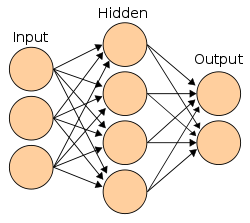
First Mathematical Model of Neural Networks
McCulloch and Pitts published 'A Logical Calculus of Ideas Immanent in Nervous Activity,' creating the first mathematical model of an artificial neuron. They showed that simple binary neurons connected in networks could, in principle, compute any function computable by a Turing machine.

Turing's 'Computing Machinery and Intelligence'
Alan Turing published his landmark paper in the journal Mind, proposing the 'Imitation Game' (now known as the Turing Test) as a way to evaluate machine intelligence. He asked: 'Can machines think?' and argued the question itself was meaningless — what mattered was whether a machine could convincingly imitate human conversation.
Logic Theorist: The First AI Program
Newell and Simon created the Logic Theorist, often called the first AI program. It could prove mathematical theorems from Whitehead and Russell's Principia Mathematica — and even found a more elegant proof than the original for one theorem. It was debuted at the Dartmouth Conference.

The Dartmouth Conference
A two-month workshop at Dartmouth College where the term 'Artificial Intelligence' was officially coined. The proposal stated: 'Every aspect of learning or any other feature of intelligence can in principle be so precisely described that a machine can be made to simulate it.' This gathering brought together the founders of the field.

The Perceptron
Frank Rosenblatt built the Mark I Perceptron, the first hardware implementation of an artificial neural network. It could learn to classify simple visual patterns. The New York Times reported it as an 'Electronic Brain' that the Navy expected would 'be able to walk, talk, see, write, reproduce itself and be conscious of its existence.'

LISP Programming Language
John McCarthy created LISP (LISt Processing), a programming language designed specifically for AI research. Its features — recursion, dynamic typing, garbage collection, and homoiconicity — were decades ahead of their time.
Related topics
Related entities
Related guides
History of Artificial Intelligence
The history of artificial intelligence, from 1943 neural theory through the Dartmouth Conference, AI winters, deep learning, and the LLM and agent eras.
HistoryHistory of Neural Networks
A history of neural networks and deep learning, from the 1943 artificial neuron through the perceptron, backpropagation, and the 2012 AlexNet breakthrough.
HistoryHistory of the AI Winters
How the AI winters happened: the Perceptrons critique, the Lighthill Report, the expert systems crash, and what each AI winter taught the field.
Frequently asked questions
Who invented AI?+
No single person invented AI. It was built by many researchers in the 1940s and 1950s. Warren McCulloch and Walter Pitts modeled the artificial neuron in 1943, Alan Turing framed machine intelligence in 1950, and John McCarthy coined the term artificial intelligence in 1956 and organized the Dartmouth Conference with Marvin Minsky and others. Frank Rosenblatt built the first trainable neural network, the Perceptron, in 1957.
Who is the father of artificial intelligence?+
The title is contested. John McCarthy is the most frequent answer because he coined the term artificial intelligence in 1956, organized the Dartmouth Conference, and created the LISP language in 1958. Alan Turing is also named for setting the field's central question in 1950, and Marvin Minsky is cited as a co-founder. There is no single agreed father of AI.
When was AI invented?+
AI emerged over the 1940s and 1950s rather than on a single date. Key moments include the McCulloch-Pitts neuron model in 1943 and Turing's paper on machine intelligence in 1950. The field was formally named and founded as a discipline at the Dartmouth Conference in 1956, which is the date most often cited as the birth of AI.
Who coined the term artificial intelligence?+
John McCarthy coined the term artificial intelligence in 1956, in the proposal for the Dartmouth Summer Research Project on Artificial Intelligence. The two-month workshop at Dartmouth College gave the field both its name and its founding gathering of researchers.
What was the first AI program?+
The Logic Theorist, created by Allen Newell, Herbert Simon, and Cliff Shaw in 1956, is often called the first AI program. It proved mathematical theorems from Whitehead and Russell's Principia Mathematica and even found a more elegant proof than the original for one theorem. It was demonstrated at the Dartmouth Conference.