Editorial Guide
History of Artificial Intelligence
The history of artificial intelligence runs from a 1943 mathematical model of a neuron to systems that now write code and complete multi-step work. It is a story of a few durable ideas, two long winters of disappointment, and a deep learning revival that turned research into mainstream software. This page is the overview that ties the whole arc together and links out to every guide on the site.
Summary
The history of artificial intelligence, from 1943 neural theory through the Dartmouth Conference, AI winters, deep learning, and the LLM and agent eras.
Timeline span
1943 to 2025 across 16 featured milestones.
Explore next
Jump into related tags, entity pages, and the full chronology below.
Theoretical foundations, 1943 to 1955
AI had a theory before it had a name. In 1943 Warren McCulloch and Walter Pitts published 'A Logical Calculus of Ideas Immanent in Nervous Activity,' the first mathematical model of an artificial neuron. They showed that simple binary neurons wired into networks could, in principle, compute any function a Turing machine could compute. Every modern neural network traces its conceptual lineage to that paper. In 1950 Alan Turing reframed the central question in 'Computing Machinery and Intelligence,' arguing that 'Can machines think?' was the wrong thing to ask. What mattered was whether a machine could convincingly imitate human conversation, an idea now known as the Turing Test.
These two contributions set the two poles that the field still works between: a bottom-up account of intelligence as something networks of simple units learn, and a behavioral test that judges intelligence by what a system does rather than how it is built. Neither author had the computing power to test their ideas at scale, so for more than a decade the work stayed mostly on paper. That gap between a clear idea and the hardware to run it is a pattern that recurs throughout the history of artificial intelligence.
The field is born, 1956 and the early optimism
Artificial intelligence became a named discipline at a two-month workshop at Dartmouth College in the summer of 1956. John McCarthy, Marvin Minsky, Nathaniel Rochester, and Claude Shannon organized it, and the proposal stated that 'every aspect of learning or any other feature of intelligence can in principle be so precisely described that a machine can be made to simulate it.' The gathering coined the term 'artificial intelligence' and brought together most of the people who would lead the field for the next two decades. A year later, in 1957, Frank Rosenblatt built the Mark I Perceptron at Cornell, the first hardware implementation of a neural network, able to learn to classify simple visual patterns.
The optimism of this period was real and, in retrospect, overstated. The New York Times reported the Perceptron as an 'Electronic Brain' that the Navy expected would one day walk, talk, see, and be conscious of its existence. The ambition set at Dartmouth drove decades of funded research, but it also created promises the technology could not keep. The overpromise-and-underdeliver cycle that started here would repeat, and it is the direct cause of the funding collapses that followed.
The AI winters and what went wrong
The first reversal came from inside the field. In 1969 Marvin Minsky and Seymour Papert published 'Perceptrons,' proving mathematically that a single-layer perceptron could not solve the XOR problem or other tasks that are not linearly separable. The proof was correct but widely overgeneralized: multi-layer networks could solve those problems, yet the book was read as proof that neural networks were fundamentally limited. Funding and researchers moved elsewhere, and neural network research stalled for over a decade. In 1973 the Lighthill Report delivered a broader verdict in the United Kingdom, concluding that 'in no part of the field have the discoveries made so far produced the major impact that was then promised,' which triggered deep funding cuts.
What went wrong was not the underlying ideas but the gap between narrow successes and the general intelligence that had been promised. When a field sells human-level capability and delivers pattern classifiers, a backlash follows. The damage was real: important work, including the backpropagation algorithm, sat largely ignored through the anti-neural-network climate of the 1970s. The lesson that inflated expectations invite funding collapse is the throughline of both AI winters, and it is worth studying on its own.
The deep learning revival, 2006 to 2017
The recovery began with a training breakthrough. In 1986 David Rumelhart, Geoffrey Hinton, and Ronald Williams published 'Learning Representations by Back-propagating Errors' in Nature, showing that backpropagation could train multi-layer networks effectively and reviving the line of research the 1969 critique had buried. Twenty years later, in 2006, Hinton's work on deep belief networks showed that deep networks could be trained layer by layer, often treated as the starting gun for modern deep learning. The decisive proof arrived in 2012, when AlexNet, built by Alex Krizhevsky, Ilya Sutskever, and Hinton, won the ImageNet competition by a large margin and cut the error rate sharply while training on two consumer GPUs.
AlexNet settled the question of whether deep learning worked at scale, and the field reorganized around it almost overnight. In 2016 DeepMind's AlphaGo beat Lee Sedol four games to one at Go, a game long considered decades away from being solved, and its Move 37 showed the system could be creative rather than merely fast. Earlier, in 1997, IBM's Deep Blue had beaten world chess champion Garry Kasparov, but that was brute-force search rather than learning, a distinction that mattered. The 2006 to 2017 span is where AI moved from promising research to systems that outperformed the best humans in hard domains.
The transformer and the LLM era
In June 2017 eight researchers at Google published 'Attention Is All You Need,' introducing the Transformer architecture. It replaced recurrence with self-attention, which let models process whole sequences in parallel and scale far beyond what came before. The Transformer is the architecture behind GPT, BERT, Claude, Gemini, and nearly every frontier system since, which makes it the most consequential AI paper of the 2010s. In 2020 OpenAI released GPT-3 with 175 billion parameters, a hundred times larger than its predecessor, and without fine-tuning it could write essays, code, and poetry from a few examples in the prompt. GPT-3 gave the scaling hypothesis, the idea that bigger models would simply get more capable, real credibility.
The public arrived in November 2022. ChatGPT, built on GPT-3.5 and tuned with reinforcement learning from human feedback, reached one million users in five days and a hundred million in two months, the fastest-growing consumer application on record. GPT-4 followed in March 2023 as a multimodal model that read text and images, passed the bar exam near the 90th percentile, and forced every industry to reckon with what these systems could do. This is the stretch where AI stopped being expert knowledge and became something most people had used.
The agentic era and where things stand
By 2025 the frontier shifted from better answers to systems that could act. Frontier models were wrapped in software that could browse the web, call tools, edit files, execute code, manage state, and carry multi-step tasks forward with limited supervision. Claude Code, OpenAI's Operator, Google's Project Mariner, and a wave of agent frameworks turned 'AI agent' from a research label into a product category. The change was less about conversation quality and more about systems that observe, plan, and act across real software environments.
That shift raised sharper questions than the chatbot era did: permissions, oversight, reliability, and what happens to knowledge work when software can execute rather than only suggest. Read against the full arc, the agentic era is a stronger answer to the same questions Turing and the Dartmouth founders posed, namely whether machines can reason, learn, and act usefully in the world. The history of artificial intelligence is still being written, and the open problems now are about trust and control as much as raw capability.
Milestone chronology
The essential timeline behind this guide, ordered chronologically.
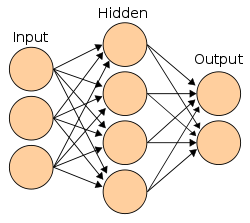
First Mathematical Model of Neural Networks
McCulloch and Pitts published 'A Logical Calculus of Ideas Immanent in Nervous Activity,' creating the first mathematical model of an artificial neuron. They showed that simple binary neurons connected in networks could, in principle, compute any function computable by a Turing machine.

Turing's 'Computing Machinery and Intelligence'
Alan Turing published his landmark paper in the journal Mind, proposing the 'Imitation Game' (now known as the Turing Test) as a way to evaluate machine intelligence. He asked: 'Can machines think?' and argued the question itself was meaningless — what mattered was whether a machine could convincingly imitate human conversation.

The Dartmouth Conference
A two-month workshop at Dartmouth College where the term 'Artificial Intelligence' was officially coined. The proposal stated: 'Every aspect of learning or any other feature of intelligence can in principle be so precisely described that a machine can be made to simulate it.' This gathering brought together the founders of the field.

The Perceptron
Frank Rosenblatt built the Mark I Perceptron, the first hardware implementation of an artificial neural network. It could learn to classify simple visual patterns. The New York Times reported it as an 'Electronic Brain' that the Navy expected would 'be able to walk, talk, see, write, reproduce itself and be conscious of its existence.'

Perceptrons: The Book That Killed Neural Networks
Minsky and Papert published 'Perceptrons,' mathematically proving that single-layer perceptrons could not solve the XOR problem or other non-linearly separable tasks. While technically correct, the book was widely interpreted as proving neural networks were fundamentally limited — though multi-layer networks could solve these problems.
The Lighthill Report
British mathematician James Lighthill published a devastating critique of AI research, concluding that the field had failed to deliver on its promises. 'In no part of the field have the discoveries made so far produced the major impact that was then promised.' The report led to massive funding cuts for AI research in the UK.

Backpropagation Rediscovered
Rumelhart, Hinton, and Williams published 'Learning Representations by Back-propagating Errors' in Nature, demonstrating that backpropagation could train multi-layer neural networks effectively. The same year, the PDP (Parallel Distributed Processing) group published their influential two-volume work on connectionism.

Deep Blue Defeats Kasparov
IBM's Deep Blue defeated world chess champion Garry Kasparov in a six-game match (3.5-2.5). It was the first time a reigning world champion lost a match to a computer under standard tournament conditions. Deep Blue evaluated 200 million positions per second using brute-force search and hand-crafted evaluation.

Deep Belief Networks: Hinton Revives Deep Learning
Geoffrey Hinton published 'A Fast Learning Algorithm for Deep Belief Nets,' showing that deep neural networks could be effectively trained by pre-training each layer as a restricted Boltzmann machine. This solved the long-standing problem of training networks with many layers.

AlexNet: The ImageNet Moment
AlexNet, a deep convolutional neural network, won the ImageNet competition by a staggering margin — reducing the error rate from 26% to 16%. Trained on two NVIDIA GTX 580 GPUs, it was dramatically deeper and more powerful than previous entries. The AI community was stunned.

AlphaGo Defeats Lee Sedol
DeepMind's AlphaGo defeated Lee Sedol, one of the greatest Go players ever, 4-1 in a five-game match in Seoul. Go has more possible positions than atoms in the universe — brute force was impossible. AlphaGo used deep reinforcement learning and Monte Carlo tree search. In Game 2, AlphaGo played Move 37 — a move so creative that experts called it 'beautiful' and 'not a human move.'

Attention Is All You Need: The Transformer
Eight researchers at Google published 'Attention Is All You Need,' introducing the Transformer architecture. It replaced recurrence with self-attention mechanisms that could process entire sequences in parallel. The paper's title was deliberately bold — and proved prescient.

GPT-3: The 175 Billion Parameter Leap
OpenAI released GPT-3 with 175 billion parameters — 100x larger than GPT-2. Without any fine-tuning, GPT-3 could write essays, code, poetry, translate languages, and answer questions through 'few-shot learning' (learning from just a few examples in the prompt). The API launched in beta, enabling thousands of applications.
ChatGPT: AI Goes Mainstream
OpenAI released ChatGPT, a conversational AI based on GPT-3.5 fine-tuned with RLHF (Reinforcement Learning from Human Feedback). It reached 1 million users in 5 days and 100 million in 2 months — the fastest-growing consumer application in history. People used it to write emails, debug code, brainstorm ideas, and a thousand other tasks.
GPT-4: Multimodal Intelligence
OpenAI released GPT-4, a multimodal model that could understand both text and images. It passed the bar exam (90th percentile), scored 1410 on the SAT, and demonstrated remarkably nuanced reasoning. It was a massive leap from GPT-3.5 in accuracy, safety, and capability.
The Rise of AI Agents
By 2025, frontier models were being wrapped in systems that could browse the web, call tools, edit files, execute code, manage state, and carry multi-step tasks forward with limited supervision. Claude Code, OpenAI's Operator, Google's Project Mariner, OpenClaw, and a wave of agent frameworks turned 'AI agent' from a research label into a practical product category.
Related topics
Related entities
Related guides
History of Neural Networks
A history of neural networks and deep learning, from the 1943 artificial neuron through the perceptron, backpropagation, and the 2012 AlexNet breakthrough.
HistoryHistory of Machine Learning
The history of machine learning, from Arthur Samuel's checkers program and the perceptron through statistical learning, ImageNet, and the deep learning takeover.
HistoryHistory of Large Language Models
How large language models evolved from word embeddings and the transformer through BERT, the GPT line, ChatGPT, and reasoning models.
HistoryHistory of Generative AI
The history of generative AI, from GANs in 2014 through DALL-E, Stable Diffusion, ChatGPT, Midjourney, and Sora's text-to-video.
HistoryHistory of the AI Winters
How the AI winters happened: the Perceptrons critique, the Lighthill Report, the expert systems crash, and what each AI winter taught the field.
HistoryWho Invented AI?
No single person invented AI. A clear guide to who invented AI, from Turing and McCulloch-Pitts to McCarthy, Minsky, and Rosenblatt.
HistoryHistory of DeepMind
A grounded history of DeepMind, from its deep reinforcement learning work on Atari to AlphaGo, AlphaStar, AlphaFold, and the 2024 Nobel Prizes.
HistoryHistory of Anthropic and Claude
A grounded history of Anthropic, from its 2021 founding and Constitutional AI through the Claude model family to the Claude 5 launch and the Mythos-class tier.
HistoryGPT Timeline: Every Model from GPT-1 to o3
A GPT timeline tracing every OpenAI model from GPT-1 in 2018 through GPT-3, ChatGPT, GPT-4, GPT-4o, and the o1 and o3 reasoning models.
HistoryHistory of OpenAI
A curated history of OpenAI from its 2015 founding through GPT, ChatGPT, multimodal systems, and reasoning-era products.
HistoryHistory of AI Agents
A narrative timeline of how AI agents evolved from theoretical ideas and brittle demos into real tool-using systems.
HistoryHistory of Chatbots: From ELIZA to AI Agents
The history of chatbots, from ELIZA's pattern matching in 1966 through Siri and Alexa to ChatGPT, Claude, and the shift from conversation to AI agents.
HistoryMost Important AI Milestones
A curated shortlist of the AI milestones that most changed the direction, pace, or public meaning of the field.
Frequently asked questions
What is the history of artificial intelligence?+
The history of artificial intelligence runs from a 1943 mathematical model of a neuron and Alan Turing's 1950 test for machine intelligence, through the 1956 Dartmouth Conference that named the field, two AI winters caused by overpromising, a deep learning revival that peaked with AlexNet in 2012, the 2017 Transformer and the large language model era, and the agent systems of the 2020s.
When was AI invented?+
AI was founded as an academic discipline at the Dartmouth Conference in the summer of 1956, where the term 'artificial intelligence' was coined. The theoretical groundwork came earlier, including the 1943 McCulloch-Pitts model of an artificial neuron and Alan Turing's 1950 paper on machine intelligence.
Who invented AI?+
No single person invented AI. John McCarthy, Marvin Minsky, Nathaniel Rochester, and Claude Shannon organized the 1956 Dartmouth Conference that named and launched the field. McCarthy coined the term 'artificial intelligence,' while earlier work by Warren McCulloch, Walter Pitts, and Alan Turing laid its theoretical foundations.
What are the main eras of AI history?+
The main eras are the theoretical foundations (1943 to 1955), the birth of the field at Dartmouth (1956) and the early optimism that followed, the AI winters of the 1970s and 1980s, the deep learning revival (2006 to 2017), the Transformer and large language model era starting in 2017, and the agentic era of the 2020s.
What caused the AI winters?+
The AI winters were caused by a gap between inflated promises and actual results. Minsky and Papert's 1969 book 'Perceptrons' was read as proof that neural networks were fundamentally limited, stalling that research for over a decade, and the 1973 Lighthill Report concluded the field had not delivered on its promises, triggering deep funding cuts in the United Kingdom.
When did AI become mainstream?+
AI became mainstream in late 2022 with the release of ChatGPT, which reached one million users in five days and a hundred million in two months, the fastest-growing consumer application on record. GPT-4 in March 2023 extended that reach into professional and multimodal use.