Editorial Guide
History of Neural Networks
The history of neural networks runs from a 1943 mathematical model of a single neuron to the deep systems that now dominate AI. This page also covers deep learning history, because the two stories are the same lineage: the same core idea of trainable layered networks, abandoned and revived twice before the data, compute, and algorithms finally lined up.
Summary
A history of neural networks and deep learning, from the 1943 artificial neuron through the perceptron, backpropagation, and the 2012 AlexNet breakthrough.
Timeline span
1943 to 2015 across 12 featured milestones.
Explore next
Jump into related tags, entity pages, and the full chronology below.
The first mathematical model and the perceptron
Neural networks started as a question about logic, not biology. In 1943, Warren McCulloch and Walter Pitts published a model of an artificial neuron and showed that simple binary neurons wired into networks could, in principle, compute any function a Turing machine could. That paper gave the field its conceptual foundation: intelligence might be assembled from large numbers of simple connected units.
In 1957, Frank Rosenblatt turned the idea into hardware with the Mark I Perceptron, the first physical neural network, which learned to classify simple visual patterns. The press treated it as an electronic brain on the verge of consciousness. That gap between a working classifier and the claims made for it set a pattern the field would repeat: overpromise, underdeliver, retreat.
The Perceptrons book and the connectionist setback
In 1969, Marvin Minsky and Seymour Papert published Perceptrons, proving that a single-layer perceptron could not solve the XOR problem or other tasks that are not linearly separable. The math was correct. The interpretation that spread beyond it was not: many readers took the book to mean neural networks themselves were a dead end, even though multi-layer networks could handle the very problems the proof ruled out for single layers.
The effect was a funding and research freeze that lasted more than a decade. Money moved to symbolic AI, and the connectionist program went quiet. This is one of the clearest cases in AI history of a narrow technical result being read as a verdict on a whole approach, and it set up the first AI winter for the field's neural-network wing.
Backpropagation: discovered, ignored, then rediscovered
The method that would eventually train deep networks existed during the freeze. In 1974, Paul Werbos described backpropagation in his PhD thesis, a way to train multi-layer networks by propagating errors backward through the layers. In the anti-neural-network climate of the 1970s, the work went largely unnoticed, a reminder that an algorithm can be available years before a field is willing to use it.
The idea returned in 1986, when David Rumelhart, Geoffrey Hinton, and Ronald Williams published a Nature paper showing backpropagation could train multi-layer networks effectively, alongside the connectionist Parallel Distributed Processing volumes. Backpropagation became the standard training method and the algorithmic backbone of the deep learning wave that followed.
Convolutional networks and the data and GPU ingredients
Even with backpropagation working, neural networks needed an architecture suited to images and enough data and compute to train it. Yann LeCun supplied the architecture in 1989, showing that convolutional neural networks could be trained with backpropagation to read handwritten digits. The refined LeNet-5 later hit over 99 percent accuracy on MNIST and ran in bank check readers and ATMs for years, proving these networks could do real commercial work even during the second AI winter.
The other two ingredients arrived around 2009. Fei-Fei Li's team built ImageNet, a dataset of over 14 million labeled images that gave vision research a benchmark at an unprecedented scale. The same year, researchers including Andrew Ng showed that GPUs could train neural networks tens of times faster than CPUs, removing the compute bottleneck. Hinton's 2006 deep belief networks had already shown deep networks could be trained layer by layer; now the data and hardware were in place.
The 2012 AlexNet breakthrough and modern depth
In 2012, the ingredients came together. AlexNet, a deep convolutional network built by Alex Krizhevsky, Ilya Sutskever, and Geoffrey Hinton, won the ImageNet competition by a wide margin, cutting the top error rate from 26 percent to 16 percent. Trained on two NVIDIA GTX 580 GPUs, it was deeper than anything before it, and it ended the debate about whether deep learning worked at scale. Traditional computer vision pipelines were obsolete almost overnight.
Depth kept growing. In 2015, Microsoft Research introduced ResNet, whose skip connections let networks reach 152 layers and beyond without breaking during training. ResNet won ImageNet 2015 with a 3.57 percent error rate, passing human-level performance on the benchmark for the first time. Residual connections then became a standard building block across deep architectures, including the Transformers that power today's frontier models.
Milestone chronology
The essential timeline behind this guide, ordered chronologically.
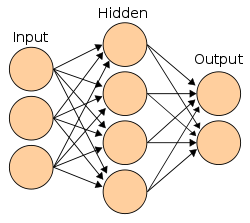
First Mathematical Model of Neural Networks
McCulloch and Pitts published 'A Logical Calculus of Ideas Immanent in Nervous Activity,' creating the first mathematical model of an artificial neuron. They showed that simple binary neurons connected in networks could, in principle, compute any function computable by a Turing machine.

The Perceptron
Frank Rosenblatt built the Mark I Perceptron, the first hardware implementation of an artificial neural network. It could learn to classify simple visual patterns. The New York Times reported it as an 'Electronic Brain' that the Navy expected would 'be able to walk, talk, see, write, reproduce itself and be conscious of its existence.'

Perceptrons: The Book That Killed Neural Networks
Minsky and Papert published 'Perceptrons,' mathematically proving that single-layer perceptrons could not solve the XOR problem or other non-linearly separable tasks. While technically correct, the book was widely interpreted as proving neural networks were fundamentally limited — though multi-layer networks could solve these problems.
Backpropagation Discovered (Initially Ignored)
Paul Werbos described the backpropagation algorithm in his PhD thesis — a method for training multi-layer neural networks by propagating errors backward through the network. However, in the anti-neural-network climate of the 1970s, the work went largely unnoticed.

Hopfield Networks: Physics Meets Neural Networks
Physicist John Hopfield showed that a type of recurrent neural network could serve as content-addressable memory, using concepts from statistical physics. The network would converge to stable states that could store and retrieve patterns — connecting neuroscience, physics, and computation.

Backpropagation Rediscovered
Rumelhart, Hinton, and Williams published 'Learning Representations by Back-propagating Errors' in Nature, demonstrating that backpropagation could train multi-layer neural networks effectively. The same year, the PDP (Parallel Distributed Processing) group published their influential two-volume work on connectionism.

LeNet: Convolutional Neural Networks
Yann LeCun demonstrated that convolutional neural networks (CNNs) could be trained with backpropagation to recognize handwritten digits. The refined LeNet-5 (1998) achieved 99%+ accuracy on MNIST and was deployed by banks to read checks — running in ATMs for years.

Deep Belief Networks: Hinton Revives Deep Learning
Geoffrey Hinton published 'A Fast Learning Algorithm for Deep Belief Nets,' showing that deep neural networks could be effectively trained by pre-training each layer as a restricted Boltzmann machine. This solved the long-standing problem of training networks with many layers.

GPU Computing for Neural Networks
Researchers including Andrew Ng demonstrated that GPUs (graphics processing units) could train neural networks 10-70x faster than CPUs. NVIDIA's CUDA platform made GPU programming accessible. This hardware breakthrough removed the computational bottleneck that had held back deep learning.

ImageNet: The Dataset That Changed Everything
Fei-Fei Li and her team created ImageNet, a dataset of over 14 million hand-labeled images in 20,000+ categories. Starting in 2010, the ImageNet Large Scale Visual Recognition Challenge (ILSVRC) became the benchmark for computer vision progress.

AlexNet: The ImageNet Moment
AlexNet, a deep convolutional neural network, won the ImageNet competition by a staggering margin — reducing the error rate from 26% to 16%. Trained on two NVIDIA GTX 580 GPUs, it was dramatically deeper and more powerful than previous entries. The AI community was stunned.

ResNet: Deeper Than Ever
Microsoft Research introduced ResNet with skip connections (residual connections), enabling the training of networks with 152+ layers — 8x deeper than previous networks. ResNet won ImageNet 2015 with 3.57% error, surpassing human-level performance (5.1%) for the first time.
Related topics
Related entities
Related guides
History of Artificial Intelligence
The history of artificial intelligence, from 1943 neural theory through the Dartmouth Conference, AI winters, deep learning, and the LLM and agent eras.
HistoryHistory of Machine Learning
The history of machine learning, from Arthur Samuel's checkers program and the perceptron through statistical learning, ImageNet, and the deep learning takeover.
HistoryHistory of Large Language Models
How large language models evolved from word embeddings and the transformer through BERT, the GPT line, ChatGPT, and reasoning models.
HistoryHistory of DeepMind
A grounded history of DeepMind, from its deep reinforcement learning work on Atari to AlphaGo, AlphaStar, AlphaFold, and the 2024 Nobel Prizes.
HistoryHistory of the AI Winters
How the AI winters happened: the Perceptrons critique, the Lighthill Report, the expert systems crash, and what each AI winter taught the field.
Frequently asked questions
What is the history of neural networks?+
Neural networks began with the 1943 McCulloch-Pitts model of an artificial neuron and Frank Rosenblatt's 1957 perceptron. After a long setback, backpropagation made multi-layer training practical in 1986, and the rise of large datasets and GPUs led to the 2012 AlexNet breakthrough that started the modern deep learning era.
Who invented the neural network?+
Warren McCulloch and Walter Pitts created the first mathematical model of a neuron in 1943, and Frank Rosenblatt built the first working neural network hardware, the perceptron, in 1957. There is no single inventor: the field is the work of many people across these milestones.
What is backpropagation and who discovered it?+
Backpropagation is a method for training multi-layer neural networks by propagating errors backward through the layers to adjust weights. Paul Werbos described it in his 1974 PhD thesis, but it was largely ignored until David Rumelhart, Geoffrey Hinton, and Ronald Williams popularized it in a 1986 Nature paper.
Why did neural networks fall out of favor?+
In 1969, Minsky and Papert's book Perceptrons proved that single-layer perceptrons could not solve problems like XOR. The result was widely read as a verdict on neural networks in general, which cut funding and research for over a decade even though multi-layer networks could solve those problems.
What was AlexNet and why did it matter?+
AlexNet was a deep convolutional neural network that won the 2012 ImageNet competition by a large margin, cutting the top error rate from 26 percent to 16 percent. Trained on two NVIDIA GPUs, it proved deep learning worked at scale and made it the dominant approach in computer vision and beyond.