Editorial Guide
History of DeepMind
DeepMind was founded in London in 2010 and acquired by Google in 2014. Its history tracks how reinforcement learning moved from playing Atari games to solving a 50-year-old biology problem, and how a games-focused research lab ended up tied to Nobel Prize work. This page follows that path through the lab's most cited milestones.
Summary
A grounded history of DeepMind, from its deep reinforcement learning work on Atari to AlphaGo, AlphaStar, AlphaFold, and the 2024 Nobel Prizes.
Timeline span
2013 to 2024 across 6 featured milestones.
Explore next
Jump into related tags, entity pages, and the full chronology below.
Deep reinforcement learning and the Atari breakthrough
In December 2013 DeepMind demonstrated a Deep Q-Network (DQN) that learned to play Atari 2600 games directly from raw pixel inputs, reaching superhuman performance on many of them with no task-specific engineering. The same architecture handled different games without being rebuilt for each one, which is what made the result stand out from earlier game-playing systems.
The work combined deep learning with reinforcement learning, showing that an agent could learn complex strategies from raw sensory data rather than hand-coded features. Google acquired DeepMind for roughly 500 million dollars shortly after, a deal that signaled Big Tech's aggressive entry into frontier AI research.
AlphaGo, the Go milestone, and self-play
In March 2016 DeepMind's AlphaGo defeated Lee Sedol, one of the strongest Go players ever, 4-1 in a five-game match in Seoul. Go has more possible positions than there are atoms in the universe, so brute force was not an option. AlphaGo combined deep reinforcement learning with Monte Carlo tree search, and its Move 37 in Game 2 was creative enough that experts described it as a move no human would play. Around 200 million people watched.
In October 2017 AlphaGo Zero went further by learning entirely through self-play, with no human game data and no hand-crafted features. Within 40 days it surpassed every earlier version, including the one that beat Lee Sedol. That result raised a sharper question than the original match: whether AI starting from nothing could discover strategies humans had never found.
Mastering real-time strategy with AlphaStar
In January 2019 DeepMind's AlphaStar reached Grandmaster level in StarCraft II, a real-time strategy game that demands long-term planning, deception, and fast tactical decisions under incomplete information. That mix of constraints made it harder than Go or chess, where both players see the full board.
The result mattered because it pushed reinforcement learning into real-time, imperfect-information, multi-agent environments. Those conditions are closer to the messiness of the real world than the clean turn-based games that came before, which is why AlphaStar reads as a step toward agents that operate outside tidy rule sets.
AlphaFold and protein folding as a scientific contribution
In November 2020 DeepMind's AlphaFold 2 solved the 50-year-old protein structure prediction problem, reaching accuracy comparable to experimental methods at the CASP14 assessment. It could predict how a protein folds from its amino acid sequence, a problem that had stumped biologists for half a century.
This is where the lab's methods left games behind and entered science directly. AlphaFold has since predicted structures for more than 200 million known proteins, with effects on drug discovery, biology, and medicine. The work moved DeepMind from competition results to a contribution that other researchers build on, and it set up the recognition that followed.
Recognition: the 2024 Nobel Prizes
In October 2024 AI research received the highest scientific recognition. The Nobel Prize in Chemistry went to Demis Hassabis and John Jumper for AlphaFold, alongside David Baker for computational protein design. In the same week, the Nobel Prize in Physics went to Geoffrey Hinton and John Hopfield for foundational work on neural networks and machine learning.
For DeepMind the chemistry prize closed the loop that started with AlphaFold in 2020, turning a research result into a Nobel-recognized contribution. Hinton used his acceptance to warn about AI risks, which put celebration and caution side by side at the field's most public moment.
Milestone chronology
The essential timeline behind this guide, ordered chronologically.

DeepMind's DQN Masters Atari Games
DeepMind demonstrated a deep reinforcement learning agent (Deep Q-Network) that learned to play Atari 2600 games directly from pixel inputs, achieving superhuman performance on many games with no task-specific engineering. Google acquired DeepMind for ~$500 million shortly after.
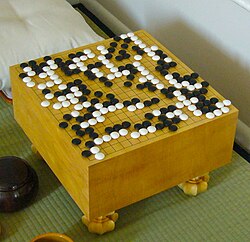
AlphaGo Defeats Lee Sedol
DeepMind's AlphaGo defeated Lee Sedol, one of the greatest Go players ever, 4-1 in a five-game match in Seoul. Go has more possible positions than atoms in the universe — brute force was impossible. AlphaGo used deep reinforcement learning and Monte Carlo tree search. In Game 2, AlphaGo played Move 37 — a move so creative that experts called it 'beautiful' and 'not a human move.'
AlphaGo Zero: Learning From Scratch
AlphaGo Zero achieved superhuman Go performance with ZERO human knowledge — no training data from human games, no hand-crafted features. It learned entirely through self-play, and within 40 days surpassed all previous versions, including the one that beat Lee Sedol.
AlphaStar Masters StarCraft II
DeepMind's AlphaStar reached Grandmaster level in StarCraft II, a real-time strategy game requiring long-term planning, deception, and split-second tactics with incomplete information — far more complex than Go or chess.

AlphaFold 2: Protein Folding Solved
DeepMind's AlphaFold 2 solved the 50-year-old protein structure prediction problem, achieving accuracy comparable to experimental methods at CASP14. It could predict how proteins fold from their amino acid sequences — a problem that had stumped biologists for half a century.
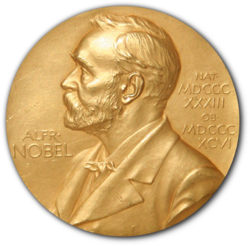
Nobel Prizes Awarded for AI Work
The 2024 Nobel Prize in Physics went to Geoffrey Hinton and John Hopfield for foundational work on neural networks and machine learning. The Nobel Prize in Chemistry went to Demis Hassabis and John Jumper (AlphaFold) alongside David Baker for computational protein design. AI research received the highest scientific recognition.
Related topics
Related entities
Related guides
History of Artificial Intelligence
The history of artificial intelligence, from 1943 neural theory through the Dartmouth Conference, AI winters, deep learning, and the LLM and agent eras.
HistoryHistory of Neural Networks
A history of neural networks and deep learning, from the 1943 artificial neuron through the perceptron, backpropagation, and the 2012 AlexNet breakthrough.
HistoryHistory of AI Agents
A narrative timeline of how AI agents evolved from theoretical ideas and brittle demos into real tool-using systems.
Frequently asked questions
What is the history of DeepMind?+
DeepMind was founded in London in 2010 and acquired by Google in 2014. Its research moved from a Deep Q-Network that learned Atari games from pixels in 2013, to AlphaGo's defeat of Lee Sedol in 2016 and AlphaGo Zero's self-play mastery in 2017, to AlphaStar reaching Grandmaster level in StarCraft II in 2019, and then to AlphaFold 2 solving protein structure prediction in 2020. That AlphaFold work led to a 2024 Nobel Prize in Chemistry.
What has DeepMind achieved?+
DeepMind built a deep reinforcement learning agent that mastered Atari games from raw pixels (2013), AlphaGo, which beat top Go player Lee Sedol (2016), AlphaGo Zero, which surpassed all prior versions through self-play alone (2017), AlphaStar, which reached Grandmaster level in StarCraft II (2019), and AlphaFold 2, which solved the protein structure prediction problem (2020). In 2024, Demis Hassabis and John Jumper shared the Nobel Prize in Chemistry for AlphaFold.
What is AlphaGo?+
AlphaGo is a Go-playing program built by DeepMind. In March 2016 it defeated Lee Sedol, one of the strongest Go players ever, 4-1 in a five-game match in Seoul, watched by around 200 million people. It combined deep reinforcement learning with Monte Carlo tree search. Its Move 37 in Game 2 was creative enough that experts said no human would have played it. A later version, AlphaGo Zero, learned Go entirely through self-play with no human game data.
What is AlphaFold and why does it matter?+
AlphaFold is a DeepMind system that predicts how a protein folds from its amino acid sequence. In November 2020, AlphaFold 2 solved this 50-year-old problem at the CASP14 assessment, reaching accuracy comparable to experimental methods. It matters because it has since predicted structures for more than 200 million known proteins, affecting drug discovery, biology, and medicine, and it led to the 2024 Nobel Prize in Chemistry for Demis Hassabis and John Jumper.
Who owns DeepMind?+
DeepMind is owned by Google. Founded in London in 2010, the lab was acquired by Google in 2014 for roughly 500 million dollars, shortly after its Deep Q-Network learned to play Atari games from raw pixels. The acquisition signaled Big Tech's move into frontier AI research.