3 milestones · 2013–2025
Explore Google's role in AI history across 3 milestones from 2013 to 2025, with the strongest concentration in competitions & benchmarks.
Chronology

Word2Vec: Words as Vectors
Google researchers published Word2Vec, showing that relatively small neural networks could efficiently learn meaningful vector representations of words from large text corpora. The famous example `king - man + woman ≈ queen` made the idea vivid: semantic relationships could be captured geometrically in vector space.
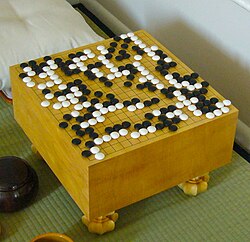
AlphaGo Defeats Lee Sedol
DeepMind's AlphaGo defeated Lee Sedol, one of the greatest Go players ever, 4-1 in a five-game match in Seoul. Go has more possible positions than atoms in the universe — brute force was impossible. AlphaGo used deep reinforcement learning and Monte Carlo tree search. In Game 2, AlphaGo played Move 37 — a move so creative that experts called it 'beautiful' and 'not a human move.'
The Rise of AI Agents
By 2025, frontier models were being wrapped in systems that could browse the web, call tools, edit files, execute code, manage state, and carry multi-step tasks forward with limited supervision. Claude Code, OpenAI's Operator, Google's Project Mariner, OpenClaw, and a wave of agent frameworks turned 'AI agent' from a research label into a practical product category.