Demis Hassabis
5 milestones · 2013–2024
Explore Demis Hassabis's contributions to AI across 5 milestones from 2013 to 2024, with the strongest concentration in research breakthroughs.
Chronology

DeepMind's DQN Masters Atari Games
DeepMind demonstrated a deep reinforcement learning agent (Deep Q-Network) that learned to play Atari 2600 games directly from pixel inputs, achieving superhuman performance on many games with no task-specific engineering. Google acquired DeepMind for ~$500 million shortly after.
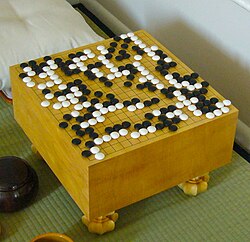
AlphaGo Defeats Lee Sedol
DeepMind's AlphaGo defeated Lee Sedol, one of the greatest Go players ever, 4-1 in a five-game match in Seoul. Go has more possible positions than atoms in the universe — brute force was impossible. AlphaGo used deep reinforcement learning and Monte Carlo tree search. In Game 2, AlphaGo played Move 37 — a move so creative that experts called it 'beautiful' and 'not a human move.'

AlphaFold 2: Protein Folding Solved
DeepMind's AlphaFold 2 solved the 50-year-old protein structure prediction problem, achieving accuracy comparable to experimental methods at CASP14. It could predict how proteins fold from their amino acid sequences — a problem that had stumped biologists for half a century.

Gemini: Google's Multimodal Response
Google launched Gemini, its most capable AI model family, natively multimodal across text, code, images, audio, and video. Gemini Ultra matched or exceeded GPT-4 on many benchmarks. It marked Google DeepMind's full response to OpenAI's dominance.
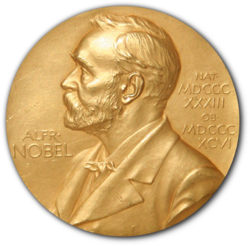
Nobel Prizes Awarded for AI Work
The 2024 Nobel Prize in Physics went to Geoffrey Hinton and John Hopfield for foundational work on neural networks and machine learning. The Nobel Prize in Chemistry went to Demis Hassabis and John Jumper (AlphaFold) alongside David Baker for computational protein design. AI research received the highest scientific recognition.