Protein structure visualization representing AlphaFold's predictions

AlphaFold 2: Protein Folding Solved

What Happened

DeepMind's AlphaFold 2 solved the 50-year-old protein structure prediction problem, achieving accuracy comparable to experimental methods at CASP14. It could predict how proteins fold from their amino acid sequences — a problem that had stumped biologists for half a century.

Why It Mattered

Perhaps the most scientifically significant AI achievement ever. AlphaFold has since predicted structures for nearly all known proteins (200M+). Revolutionized drug discovery, biology, and medicine. Led to the 2024 Nobel Prize in Chemistry.

Key People

Organizations

Tags

Related Milestones

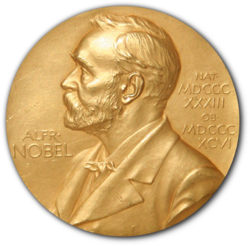
Nobel Prize medal
Research

Nobel Prizes Awarded for AI Work

The 2024 Nobel Prize in Physics went to Geoffrey Hinton and John Hopfield for foundational work on neural networks and machine learning. The Nobel Prize in Chemistry went to Demis Hassabis and John Jumper (AlphaFold) alongside David Baker for computational protein design. AI research received the highest scientific recognition.

Geoffrey HintonJohn HopfieldNobel CommitteeDeepMind
Go board representing AlphaGo Zero's self-play mastery
Research

AlphaGo Zero: Learning From Scratch

AlphaGo Zero achieved superhuman Go performance with ZERO human knowledge — no training data from human games, no hand-crafted features. It learned entirely through self-play, and within 40 days surpassed all previous versions, including the one that beat Lee Sedol.

David SilverDeepMind
Google DeepMind logo, creators of AlphaStar
Competition

AlphaStar Masters StarCraft II

DeepMind's AlphaStar reached Grandmaster level in StarCraft II, a real-time strategy game requiring long-term planning, deception, and split-second tactics with incomplete information — far more complex than Go or chess.

DeepMind
Google DeepMind logo
Research

DeepMind's DQN Masters Atari Games

DeepMind demonstrated a deep reinforcement learning agent (Deep Q-Network) that learned to play Atari 2600 games directly from pixel inputs, achieving superhuman performance on many games with no task-specific engineering. Google acquired DeepMind for ~$500 million shortly after.

Volodymyr MnihDemis HassabisDeepMind
Research

BERT: Bidirectional Language Understanding

Google published BERT (Bidirectional Encoder Representations from Transformers), which could understand language context from both directions simultaneously. BERT shattered records on 11 NLP benchmarks. Google integrated it into Search, affecting 10% of all queries.

Jacob DevlinGoogle AI

Get the latest AI milestones as they happen

Join the newsletter. No spam, just signal.