University of Toronto
3 milestones · 2006–2024
Explore University of Toronto's role in AI history across 3 milestones from 2006 to 2024, with the strongest concentration in research breakthroughs.
Chronology

Deep Belief Networks: Hinton Revives Deep Learning
Geoffrey Hinton published 'A Fast Learning Algorithm for Deep Belief Nets,' showing that deep neural networks could be effectively trained by pre-training each layer as a restricted Boltzmann machine. This solved the long-standing problem of training networks with many layers.

AlexNet: The ImageNet Moment
AlexNet, a deep convolutional neural network, won the ImageNet competition by a staggering margin — reducing the error rate from 26% to 16%. Trained on two NVIDIA GTX 580 GPUs, it was dramatically deeper and more powerful than previous entries. The AI community was stunned.
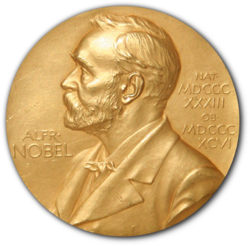
Nobel Prizes Awarded for AI Work
The 2024 Nobel Prize in Physics went to Geoffrey Hinton and John Hopfield for foundational work on neural networks and machine learning. The Nobel Prize in Chemistry went to Demis Hassabis and John Jumper (AlphaFold) alongside David Baker for computational protein design. AI research received the highest scientific recognition.