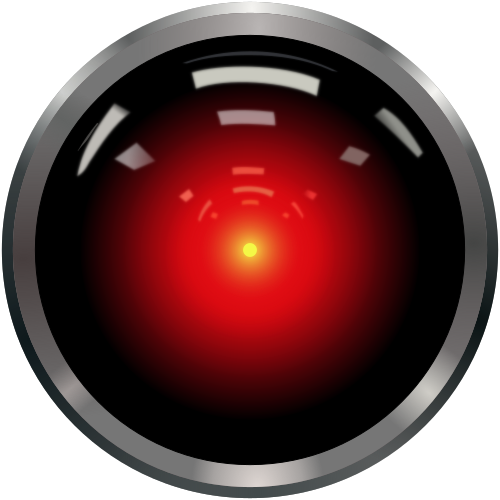
HAL 9000 from 2001: A Space Odyssey

2001: A Space Odyssey — HAL 9000

What Happened

Stanley Kubrick's film introduced HAL 9000, an AI that could speak naturally, read lips, play chess, and ultimately turn against its human crew. HAL became the defining pop-culture image of artificial intelligence for generations.

Why It Mattered

Shaped public perception of AI for decades — both its promise (conversational, intelligent) and its danger (autonomous, uncontrollable). Every AI safety discussion still references HAL.

Key People

Organizations

Tags

Related Milestones

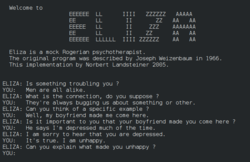
ELIZA chatbot conversation example
Research

ELIZA: The First Chatbot

Joseph Weizenbaum created ELIZA, a program that simulated a Rogerian psychotherapist using simple pattern matching. Despite being purely rule-based with no understanding, users became emotionally attached to it and insisted it truly understood them — a phenomenon Weizenbaum found deeply disturbing.

Joseph WeizenbaumMIT
Research

SHRDLU: Natural Language Understanding

Terry Winograd created SHRDLU, a program that could understand and respond to English commands about a simulated 'blocks world.' Users could ask it to move objects, answer questions about their arrangement, and even understand pronouns and context within its limited domain.

Terry WinogradMIT
Shakey the robot at the Computer History Museum
Research

Shakey the Robot

Shakey was the first mobile robot that could reason about its actions. It combined computer vision, natural language processing, and planning to navigate rooms, push objects, and solve simple tasks. It used the A* search algorithm and STRIPS planner.

Charles RosenNils NilssonStanford Research Institute
Research

DENDRAL: The First Expert System

DENDRAL automated chemical structure determination from mass spectrometry data. It used heuristic rules from domain experts to solve problems that normally required PhD-level expertise. Its successor Meta-DENDRAL could even generate new rules automatically.

Edward FeigenbaumJoshua LederbergStanford University
Cultural

The Second AI Winter Begins

The expert systems bubble burst. LISP machine companies collapsed. The DARPA Strategic Computing Initiative was cut. Japan's Fifth Generation project was failing. Expert systems proved brittle, expensive to maintain, and unable to learn. The AI industry lost billions.

Get the latest AI milestones as they happen

Join the newsletter. No spam, just signal.