Quiet Emergence
1994–2005 · 5 milestones
AI stopped trying to mimic human reasoning and embraced statistical approaches. Machines began beating humans at specific tasks.
Milestones
Support Vector Machines
Vapnik and Cortes published their work on Support Vector Machines (SVMs), a method for finding maximum-margin decision boundaries in high-dimensional spaces with unusually strong theoretical guarantees. SVMs quickly became one of the leading approaches for classification problems across text, vision, and bioinformatics.

Deep Blue Defeats Kasparov
IBM's Deep Blue defeated world chess champion Garry Kasparov in a six-game match (3.5-2.5). It was the first time a reigning world champion lost a match to a computer under standard tournament conditions. Deep Blue evaluated 200 million positions per second using brute-force search and hand-crafted evaluation.

Long Short-Term Memory (LSTM)
Hochreiter and Schmidhuber published the LSTM architecture, solving the vanishing gradient problem that plagued recurrent neural networks. LSTMs could learn long-range dependencies in sequential data by maintaining a memory cell with gates that controlled information flow.
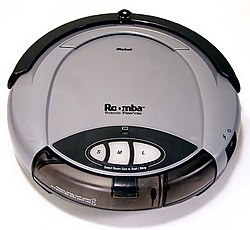
iRobot Roomba
iRobot released the Roomba, a robotic vacuum cleaner that used sensors and algorithms to autonomously navigate and clean floors. At $200, it brought autonomous robots into millions of homes.

DARPA Grand Challenge: Self-Driving Cars Begin
DARPA offered $1M for an autonomous vehicle to complete a 150-mile desert course. In 2004, no vehicle finished — the best went 7.4 miles. In 2005, Stanford's 'Stanley' (led by Sebastian Thrun) won by completing the course in under 7 hours. The 2007 Urban Challenge tested autonomous driving in traffic.
Categories in this Era
Popular Topics
Frequently asked questions
When was the Quiet Emergence era of AI?+
The Quiet Emergence era of artificial intelligence spans 1994 to 2005.
What defined the Quiet Emergence era?+
AI stopped trying to mimic human reasoning and embraced statistical approaches. Machines began beating humans at specific tasks.
What are the key milestones of the Quiet Emergence era?+
This era includes 5 milestones, among the most impactful: Deep Blue Defeats Kasparov (1997), Long Short-Term Memory (LSTM) (1997), DARPA Grand Challenge: Self-Driving Cars Begin (2004), and Support Vector Machines (1995).